There’s something instantly lovable about floppy-ear breeds. Maybe it’s the soft expression. Maybe it’s the way those long ears bounce during a run across the yard. Or maybe it’s because many floppy-eared dogs have personalities that feel warm, loyal, and incredibly human. Whatever the reason, these dogs continue to dominate family homes, social media feeds, and favorite-breed lists around the world.
But floppy ears are more than a cute feature. They come with responsibilities too.
Those adorable ears can trap moisture, hold debris, and create an environment where irritation and infections thrive. That means owners of floppy-ear breeds need to think beyond appearance. Proper grooming and ear care become part of everyday life.
The good news? It’s manageable. And once you understand what these dogs need, caring for them becomes much easier.
Let’s break down the most popular floppy-ear breeds, the challenges they face, and the practical ways you can keep those ears healthy and clean.
What Are Floppy-Ear Breeds?
Floppy-ear breeds are dogs whose ears naturally hang downward rather than stand upright. Some have short folded ears. Others have dramatic, sweeping ears that nearly touch the floor.
Genetics determine the shape. Selective breeding reinforced those traits over generations, especially in hunting and scent-tracking dogs.
Interestingly, many experts believe floppy ears may help scent hounds trap odors closer to the nose while tracking. That’s one reason breeds like Bloodhounds and Basset Hounds developed such exaggerated ears.
Not every floppy-eared dog looks the same though.
Some have:
- Feathered ears
- Thick folded ears
- Short rounded ears
- Long silky ears
- Heavy drooping ears
And each style comes with slightly different grooming needs.
Why People Love Floppy-Ear Dogs
Floppy ears soften a dog’s appearance. That matters more than people realize.
A dog with upright ears can appear alert and intense. A dog with floppy ears often looks approachable, calm, and affectionate. That visual difference influences how humans emotionally connect with dogs.
There’s also personality overlap.
Many floppy-ear breeds were developed as companion dogs, retrievers, or scent hounds. These jobs required cooperation with humans. As a result, many became known for loyalty and social behavior.
Here’s what owners commonly love about floppy-ear breeds:
| Trait | Why Owners Love It |
| Gentle expression | Makes dogs appear friendly and comforting |
| Family compatibility | Many are patient with children |
| Affectionate behavior | Often enjoy close interaction |
| Trainability | Many respond well to routines |
| Adaptability | Several breeds fit apartment or suburban living |
Of course, every dog is different. Personality depends on training, socialization, and environment too.
Still, floppy-ear breeds tend to win people over fast!
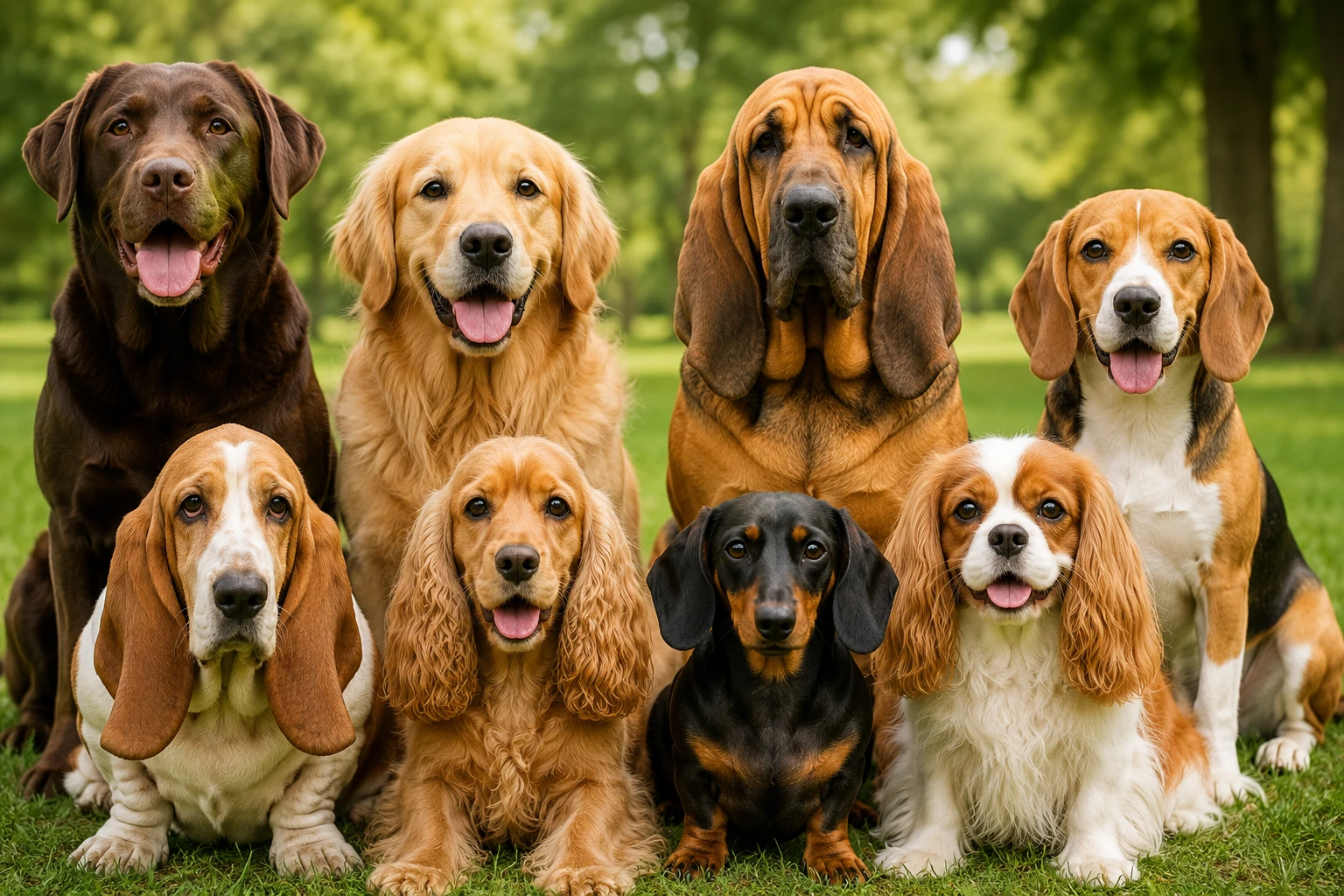
Most Popular Floppy-Ear Breeds
Basset Hound
Few dogs define floppy ears better than the Basset Hound.
Everything about this breed droops. Long ears. Heavy skin folds. Sad-looking eyes. Yet behind that sleepy expression is an excellent scent tracker with a stubborn streak.
Basset Hounds are loyal and surprisingly funny. They love following smells and moving at their own pace.
Ear care matters a lot here because their ears trap moisture easily.
Best for:
- Relaxed households
- Moderate activity levels
- Owners comfortable with grooming routines
Cocker Spaniel
Cocker Spaniels combine elegance with energy. Their long silky ears look beautiful but require regular maintenance.
This breed is affectionate and highly social. They thrive when included in daily family life.
However, Cocker Spaniels are also one of the floppy-ear breeds most commonly affected by ear infections due to dense hair growth around the ear canal.
Weekly ear checks are essential.
Beagle
Beagles are compact, playful, and full of personality. They’re also professional-level sniffers.
Originally bred for hunting, Beagles use their noses constantly. Their floppy ears help direct scents toward the nose during tracking.
These dogs do best with:
- Consistent exercise
- Mental stimulation
- Secure yards
Without enough activity, they can become loud or destructive quickly.
Labrador Retriever
Labradors remain one of the world’s most popular family dogs for good reason.
Friendly. Intelligent. Adaptable.
Their ears are shorter than some floppy-ear breeds, but they still require regular cleaning, especially after swimming.
Labs love water. Water trapped inside the ear canal? Not so lovable.
Drying the ears after swimming can dramatically reduce infection risks.
Golden Retriever
Golden Retrievers combine intelligence with warmth. They’re patient, eager to please, and deeply social.
Their floppy ears are covered with feathered fur, which can hold moisture and dirt if neglected.
Golden owners should focus on:
- Brushing around the ears
- Checking for matting
- Drying ears after outdoor play
These dogs need grooming consistency more than complicated grooming.
Bloodhound
Bloodhounds have legendary noses. Their ears are just as legendary.
Long ears help stir scent particles from the ground while tracking. Impressive for scent work. Less impressive when dirt, moisture, and drool collect underneath them.
Bloodhounds require frequent cleaning and skin maintenance.
They also need space. This isn’t a low-energy apartment dog.
Dachshund
Dachshunds may be small, but they’re bold. Very bold.
Originally bred to hunt badgers, these dogs combine courage with stubbornness. Their floppy ears are easier to manage than some longer-eared breeds, but they still require routine care.
Pay attention to:
- Ear odor
- Wax buildup
- Redness after baths
Their long backs also require careful weight management.
Cavalier King Charles Spaniel
This breed practically defines companion dogs.
Cavaliers are affectionate, gentle, and adaptable. Their long ears give them a soft, elegant appearance that owners adore.
They fit well into apartments and quieter homes, though they still enjoy walks and playtime.
Their ears should be brushed regularly to prevent tangles and hidden moisture buildup.
Small Floppy-Ear Breeds for Apartments
Not everyone has a large backyard. Thankfully, several floppy-ear breeds thrive in smaller spaces.
Top apartment-friendly choices include:
- Cavalier King Charles Spaniel
- Dachshund
- French Bulldog
- Cocker Spaniel
- Miniature Poodle mixes with floppy ears
When choosing an apartment dog, focus on:
- Noise level
- Exercise demands
- Grooming needs
- Separation anxiety tendencies
A small dog with extreme energy can feel much larger inside a tiny apartment.
Large Floppy-Ear Breeds for Active Families
Some floppy-ear breeds need movement. Lots of it.
These dogs thrive in homes where outdoor activity is part of daily life.
Great options include:
- Labrador Retriever
- Golden Retriever
- Bloodhound
- Weimaraner
- German Shorthaired Pointer
These breeds often excel with:
- Hiking
- Running
- Swimming
- Fetch games
- Structured training
Without stimulation, boredom creeps in fast.
And bored dogs create their own entertainment.
Usually at the owner’s expense!
Common Ear Problems in Floppy-Ear Breeds
This is where responsible ownership becomes important.
Floppy ears reduce airflow inside the ear canal. Less airflow means moisture lingers longer. Warm, damp environments allow bacteria and yeast to multiply quickly.
Common issues include:
| Ear Problem | Common Symptoms |
| Ear infections | Odor, redness, discharge |
| Yeast buildup | Brown debris, itching |
| Wax accumulation | Thick buildup inside ear |
| Allergic irritation | Frequent scratching |
| Moisture irritation | Head shaking after swimming |
Some floppy-ear breeds experience recurring issues throughout life. Others may only struggle occasionally.
Consistency matters more than perfection.
How to Clean and Care for Floppy Dog Ears
Many owners overcomplicate ear cleaning. It doesn’t need to feel intimidating.
Simple routines prevent most major issues.
How Often Should You Clean?
Frequency depends on the breed and lifestyle.
General guideline:
- Active swimmers: weekly
- Long-haired floppy-ear breeds: every 1–2 weeks
- Shorter-haired breeds: every few weeks
Avoid over-cleaning. Too much cleaning can irritate the ear canal.
Safe Ear Cleaning Supplies
Stick with veterinarian-approved products whenever possible.
Recommended supplies:
- Dog ear cleaning solution
- Cotton pads or gauze
- Soft towel
- Treats for rewards
Avoid:
- Alcohol
- Hydrogen peroxide
- Cotton swabs deep inside ears
Cotton swabs can push debris deeper into the canal. That creates bigger problems.
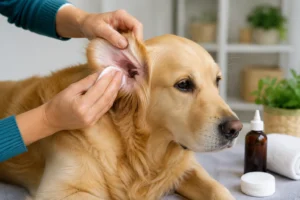
Step-by-Step Ear Cleaning Routine
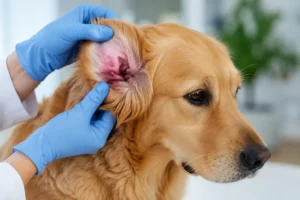
Step 1: Inspect the Ear
Look for:
- Redness
- Strong odor
- Swelling
- Excess debris
If the ear looks painful or inflamed, skip cleaning and contact your veterinarian.
Step 2: Apply Cleaner
Gently lift the ear flap and apply the cleaner according to product instructions.
Do not force the bottle deep into the ear canal.
Step 3: Massage the Base
Massage the base of the ear for 20–30 seconds.
You’ll usually hear a squishing sound. That’s normal.
Step 4: Let Your Dog Shake
This part gets messy fast!
Let the dog shake naturally to loosen debris.
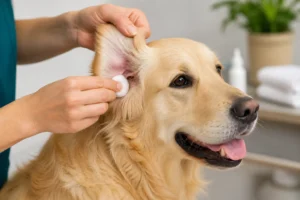
Step 5: Wipe Away Debris
Use cotton pads or gauze to wipe visible debris from the outer ear.
Keep movements gentle.
Step 6: Reward the Dog
Positive reinforcement helps tremendously.
Treats turn ear cleaning into a predictable, low-stress routine.
Signs Your Floppy-Eared Dog Needs Veterinary Attention
Not every ear problem can be handled at home.
Certain symptoms deserve professional care quickly.
Watch for:
- Persistent foul smell
- Yellow or dark discharge
- Intense scratching
- Swelling
- Crying during touch
- Head tilting
- Balance problems
Ear infections can worsen surprisingly fast. Waiting too long increases discomfort and treatment costs.
When in doubt, get the ears checked.
Grooming Tips for Floppy-Ear Breeds
Ear cleaning is only one part of maintenance.
Overall grooming plays a major role in ear health too.
Keep Ears Dry
Moisture is the enemy.
After:
- Baths
- Swimming
- Rain exposure
- Humid outdoor activity
Dry the ears gently with a towel.
Trim Excess Hair
Some floppy-ear breeds grow dense fur around the ear opening.
Too much hair restricts airflow and traps debris.
Professional groomers can help manage this safely.
Brush Around the Ears
Mats around the ears pull on skin and trap moisture underneath.
Brushing several times weekly reduces buildup.
Watch Seasonal Changes
Hot weather increases moisture risks. Spring allergies can also trigger ear irritation.
During allergy season, monitor scratching more closely.
Choosing the Right Floppy-Ear Breed for Your Lifestyle
A dog’s appearance should never be the only deciding factor.
Floppy-ear breeds vary dramatically in energy, grooming, trainability, and temperament.
Best for Families With Kids
- Labrador Retriever
- Golden Retriever
- Beagle
Best for Seniors
- Cavalier King Charles Spaniel
- Basset Hound
The Best for Apartments
- Dachshund
- Cavalier King Charles Spaniel
Best for Outdoor Lifestyles
- Bloodhound
- Labrador Retriever
- German Shorthaired Pointer
Before choosing a breed, ask yourself:
- How much exercise can I realistically provide?
- Am I comfortable with grooming?
- How much shedding can I tolerate?
- Do I travel often?
- How much time will the dog spend alone?
Those questions matter more than appearance alone.
Fun Facts About Floppy-Ear Dogs
Floppy-ear breeds have some fascinating history behind them.
Here are a few fun highlights:
- Bloodhounds can track scents that are days old.
- Basset Hounds have one of the strongest noses in the canine world.
- Beagles are commonly used in airport detection work.
- Some of the longest dog ears ever recorded belonged to a Bloodhound.
- Many floppy-eared hunting dogs were bred for teamwork with humans rather than independent guarding.
Their ears may look adorable, but many were built for serious working roles.
Final Thoughts
Floppy-ear breeds bring personality, warmth, and companionship into homes in a way few dogs can match. Their expressive faces and affectionate nature make them unforgettable.
But those ears need attention.
Regular cleaning, moisture control, grooming, and observation can prevent many common problems before they escalate. And honestly, once the routine becomes habit, it’s not difficult at all.
The key is consistency.
Choose a floppy-eared dog that genuinely matches your lifestyle, energy level, and grooming comfort. That decision creates better outcomes for both the owner and the dog.
Because healthy ears don’t just make dogs more comfortable. They make daily life happier too!
FAQs
Floppy ears reduce airflow inside the ear canal, which allows moisture and bacteria to build up more easily.
Most floppy-ear breeds benefit from ear cleaning every 1–2 weeks, though active swimmers may need more frequent care.
Labrador Retrievers, Golden Retrievers, and Beagles are popular family-friendly floppy-ear breeds due to their social personalities.
Yes, several floppy-ear breeds like Dachshunds and Cavalier King Charles Spaniels adapt very well to apartment living.
Head shaking, bad odor, redness, discharge, and constant scratching are common warning signs.
Some are. Breeds with long fur around the ears often require extra brushing and regular maintenance.
Not necessarily, but moisture trapped inside the ears after swimming can increase infection risk if the ears are not dried properly.
Avoid using alcohol, hydrogen peroxide, or pushing cotton swabs deep into the ear canal.
No. Some floppy-ear breeds shed minimally, while others like Golden Retrievers shed throughout the year.
Labrador Retrievers and Cavalier King Charles Spaniels are often considered excellent choices for first-time dog owners.